Case Study
Launching Dropshop: A fan-first NFT marketplace for sports collectibles TIED TO real-world experiences
Dropshop was built to make digital collectibles feel as intuitive as buying merch, while still capturing what makes blockchain valuable: verifiable ownership, transferability, and a true secondary market. We shipped a 0→1 platform that supported pack drops, buy-now listings, auctions, and a peer-to-peer marketplace, then evolved it toward “NFTs with real value” through utility, storytelling, and a roadmap connecting physical memorabilia to digital experiences.
Fastest Drop Sell-Out Time
First NFT drop for Toronto Maple Leafs
Sell-Through Rate
Conversion
Waitlist
Role
Product Design Lead
Scope
0→1 product launch + evolution of a commercial product for other teams and leagues
Team
Designer
Timeline
2021-2023
The content is password protected.
Enter the provided password to view.
OverView
Dropshop is a digital collectibles platform built to help mainstream sports fans buy, collect, and trade verified team assets without needing to understand crypto. We launched a 0→1 experience that could support high-demand drops, sustain engagement between drops, and evolve collectibles beyond “digital only” through real-world utility.
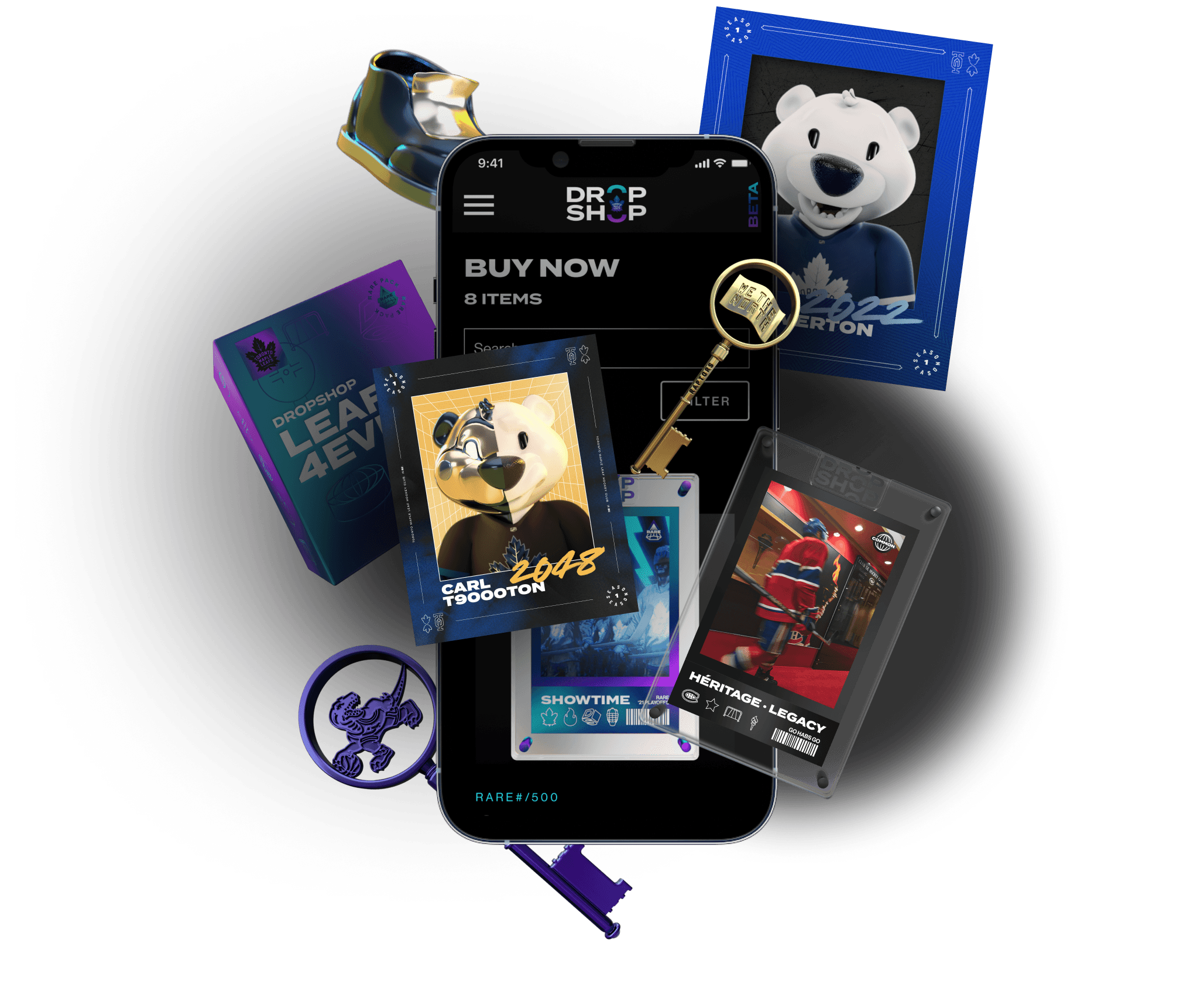
Overview of what the platform enables:
The Challenge
We weren’t trying to build “an NFT product.” We were solving a fan experience problem: how do you introduce a new category of digital ownership to a mainstream sports audience in a way that feels trustworthy, effortless, and worth coming back to.
Three challenges defined the work:
Adoption Friction
Most NFT experiences assumed crypto knowledge. Fans needed a purchase and collection flow that felt familiar, with complexity hidden until it mattered.
Trust and legitimacy
Fans needed clear proof of authenticity, understandable ownership, and confidence that the platform wouldn’t break during high-demand moments.
Drop reliability at peak demand
Drops create extreme traffic spikes and high emotional stakes. The product had to communicate fairness, handle sold-out moments cleanly, and keep users informed through every transaction state.
At the same time, the platform had to be repeatable for the business: a drop engine and operating model that could scale across teams, campaigns, and future utility concepts.
My Role
I led the product experience from concept to launch and guided the evolution plan post‑launch.
Strategy: 4 Core Pillars
Make it feel like commerce, not crypto
Treat drop-day reliability as a product requirement
Lead with trust and storytelling
Build a utility-driven engagement loop
What Shipped
Post Launch Impact
In the first launch window, Dropshop proved we could drive mainstream demand and sustain it through repeatable drops and a functioning marketplace layer.
First drop sell-out time:
SecondsSell-through rate:
%Across first drops
DRop Day Users
Peak concurrent users on drop day
Repeat Buyers
%Repeat buyers within 60 days:
Marketplace Listings
Listings created in first 60 days
DropShop
Weekly Active Buyers on Launch
Learnings
Reliability is the product
When demand spikes, fans don’t judge the platform on features. They judge it on clarity, fairness, and whether the experience holds up under pressure. The biggest UX wins came from state design: pre-drop expectations, queue and sold-out communication, and transparent transaction status.
Trust must be designed, not assumed
Mainstream users don’t start with confidence in NFTs. Authenticity signals, plain-language explanations, and consistent ownership states mattered as much as visual design. The product had to earn trust repeatedly, not just once.
Progressive disclosure beats education
Long explainer content didn’t move the needle the way we expected. What worked was removing decisions, simplifying steps, and revealing complexity only when it was required. Fans wanted to collect first, and learn later.
Utility drives retention
Digital ownership becomes meaningful when it connects to access, experiences, or real-world value. The strongest retention moments came when collectibles felt like keys, not content.
Playbooks scale drops
A drop engine is only as good as the repeatability around it. Instrumentation, monitoring, and a checklist-based launch process reduced risk and made each subsequent drop smoother to run and easier to improve.
What's Next
FY25 DIRECTION